 Español
How it works
Log in
Español
How it works
Log in
For families
Companionship for older adults: what really helps
In Spain, more than two million people aged 65 or over live alone. Many are doing just fine — living alone isn't the same as being lonely — but when the loneliness isn't chosen, it weighs: on the spirits, on health and on the family that lives far away and can't reach everything. This page gathers what really helps, from the human to the tech, told honestly — including what no device can replace.
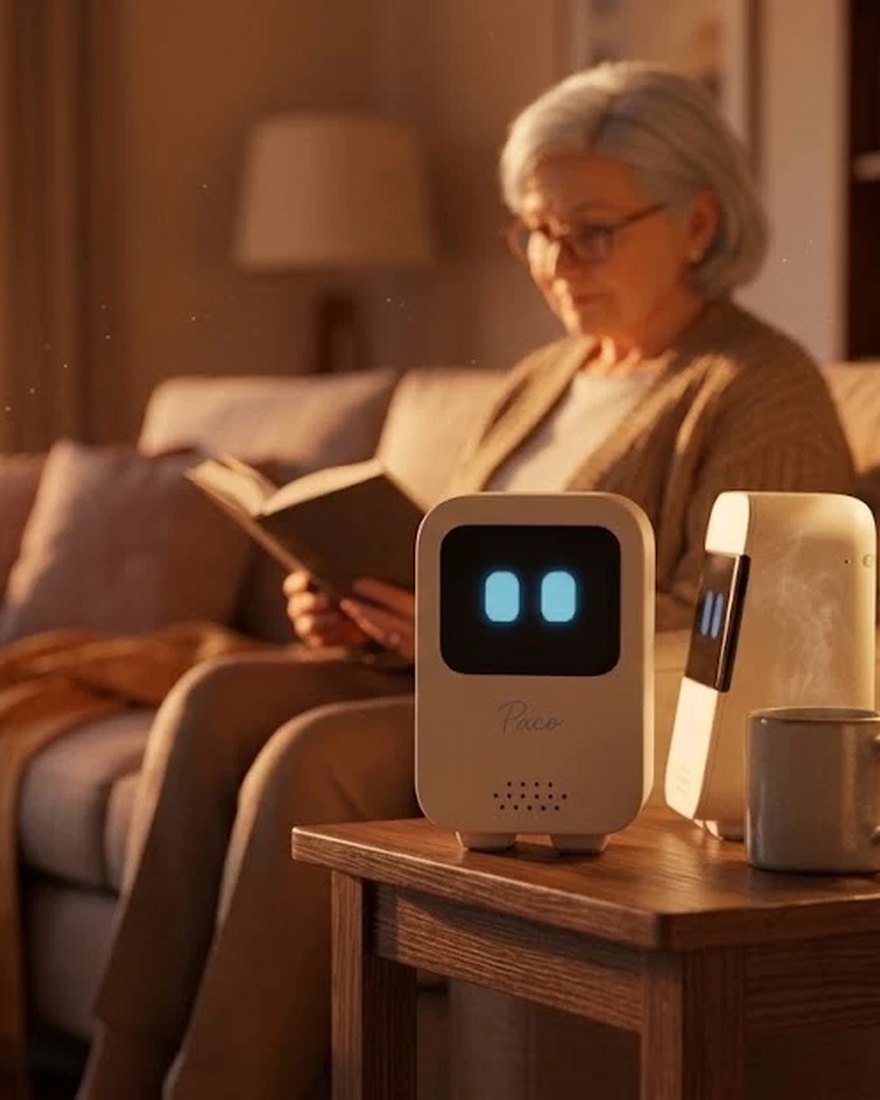
The human comes first
No tech advice comes before this. What keeps people company most is the old stuff: a short but daily call (better ten minutes every day than an hour on Sunday), visits with a fixed date to look forward to, and a reason to leave the house — the market, the day centre, the weekly game.
There are also volunteer befriending programmes in almost every town — councils, the Red Cross and charities for older people run them — where a volunteer visits or calls the same person each week. They're free and they work. If there's a loneliness in your family that worries you, start there: ask your local social services.
Routines hold the day together
Loneliness grows when the day has no shape: no schedule, no tasks, nothing to look forward to. Giving it structure helps enormously — getting up and eating at the same time, a fixed walk, medication with its routine, an activity in the afternoon. You don't need to fill the diary: you need the day to have a skeleton. Anything that helps hold that structure — a big calendar in the kitchen, reminders that go off on their own, someone who asks "have you eaten?" — is helping against loneliness, even if it doesn't look like it.
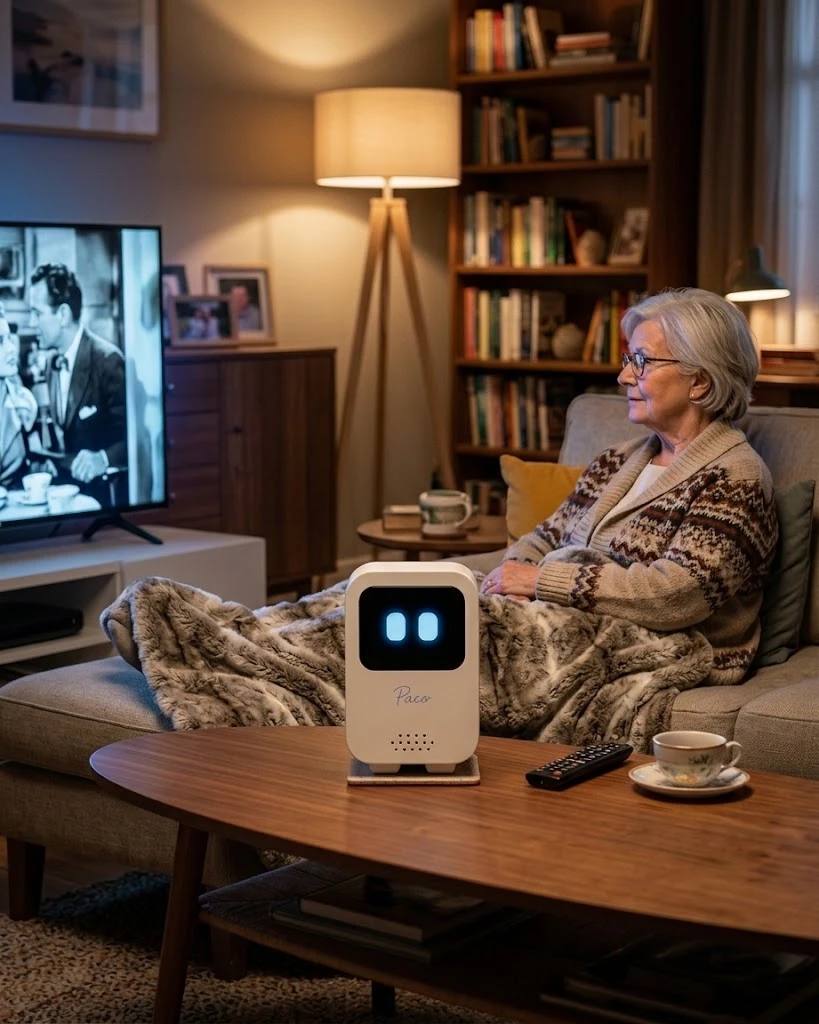
The tech that does help (if it's simple)
Technology only keeps company if the person can use it alone. That's the yardstick. With it in hand:
Video calls bring the grandchildren closer like nothing else — when someone picks up for you or the device makes it easy. A phone with tiny menus usually ends up in a drawer.
Telecare — the button with 24-hour operators — is the safety net for the bad moment. If there's a risk of falls or health problems, it's the first thing to arrange. It doesn't keep company, that's not its job: it's there for the emergency.
Smart speakers play the radio and tell the time, and for that they're fine. But they answer and forget you: they don't know who you are, don't remember what you told them, and you have to call their name in every sentence. As company, they fall short.
Companion robots are the new piece: they truly converse, remember the person and their people, remind of medication and appointments on their own, play music from their era and call the family without dialling numbers. We've written a whole page on what a companion robot is and how to choose one, with the questions worth asking before buying any of them — ours included.
What Paco brings day to day
Paco is our companion robot, designed in Spain and made for exactly this: you talk to it and it answers in its voice, with no menus or apps to learn. It remembers what you tell it from one day to the next, reminds of medication and appointments on its own, plays music, tells jokes and plays riddles, and just say "call my daughter" and the family is at the other end. All in your language — and with a rule of honesty: Paco never pretends to be a person; it tells you itself that it's an artificial intelligence. The guide has everything it does, feature by feature.
What no device replaces
We're saying this while selling a companion robot, so take it seriously: no device replaces a visit, a family meal or the neighbourhood volunteer programme. And none replaces telecare or the emergency line in an emergency — nor does Paco, and we say so in writing in our terms (in Spanish). Well-chosen technology removes silence, holds routines together and brings the family closer. The rest is still down to us, to people.
Reserve your Paco See everything it does
You might also like: what a companion robot is · home robots: the full map · who makes Paco.