 Español
How it works
Log in
Español
How it works
Log in
Understanding it
Companion robot: what it is, what it does and how to choose yours
A companion robot is an AI-powered device made to keep a person company: it talks with them, remembers what they say and lends a hand day to day. This page explains what a genuinely good one does, how it differs from a smart speaker and from telecare, how much it costs and what to look at before you decide — honestly, including what they don't do.
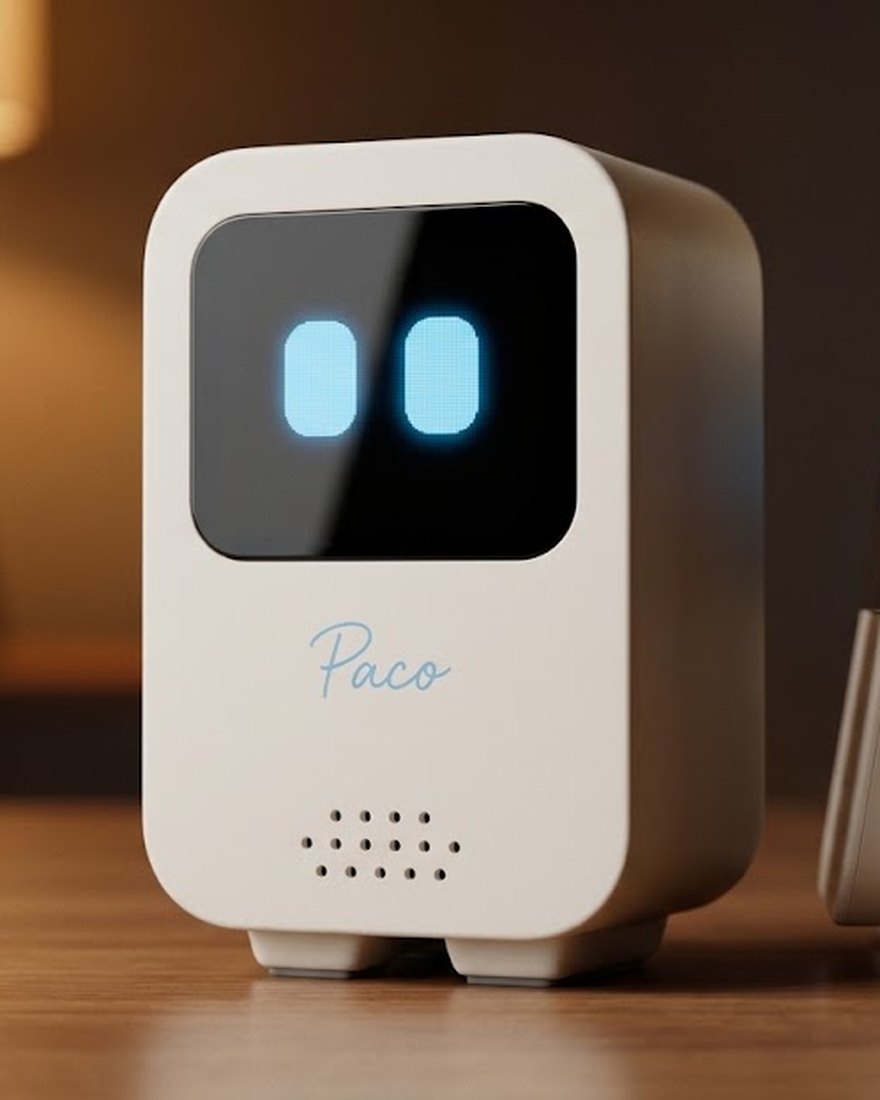
What a companion robot is (and isn't)
The word "robot" brings to mind machines that walk and pick things up. A companion robot isn't that: it's a device that lives at home — on a table, in the living room, in the kitchen — whose job is company: to listen, chat, remember and remind. Its value isn't in moving, but in the relationship: in remembering today what you told it yesterday.
It's not a toy either, nor a robot pet that does cute tricks. Today's companion robots understand natural language: you talk to them like a person, with no memorised commands, and they answer in their own voice. And an honest one tells you itself that it's an artificial intelligence — it doesn't pretend to be a person or play with your feelings.
What a good companion robot really does
Beyond the brochure, this is what a good companion robot brings to a home, all by voice and with no menus:
Conversation with memory. The difference between "answering" and "keeping company" is remembering: your people, your tastes, what worries you. A conversation that starts from scratch every day isn't company.
Reminders and routines. Medication, appointments, the daily routine. It's the robot that speaks first, at the right moment, without anyone having to check a screen — and if no one's home, the reminder arrives by email.
A bridge to the family. Calling the children without dialling numbers, emailing what was said or looked up, letting the family know what matters.
Entertainment to measure. Music from their era, word and memory games, riddles, the day's agenda read aloud.
In Paco's guide you can see these features explained one by one, exactly as they work today — no promises about the future.
Companion robot for older adults: why it works
Most people looking for a companion robot are looking for one for a father, a mother or a grandparent who spends many hours alone. And that's where it shows most, for three very concrete reasons:
There's nothing to learn. No apps, no menus, no fine print: you talk to it. For someone who never got along with a smartphone, that difference is everything.
It breaks the silence of the house. Having someone to talk the day over with — even a machine that doesn't hide it — changes the mood of an afternoon. And medication and appointment reminders take a daily worry off the family.
It brings the family closer, frictionlessly. "Paco, call my daughter" works first time. No searching contacts, no video calls no one knows how to pick up.
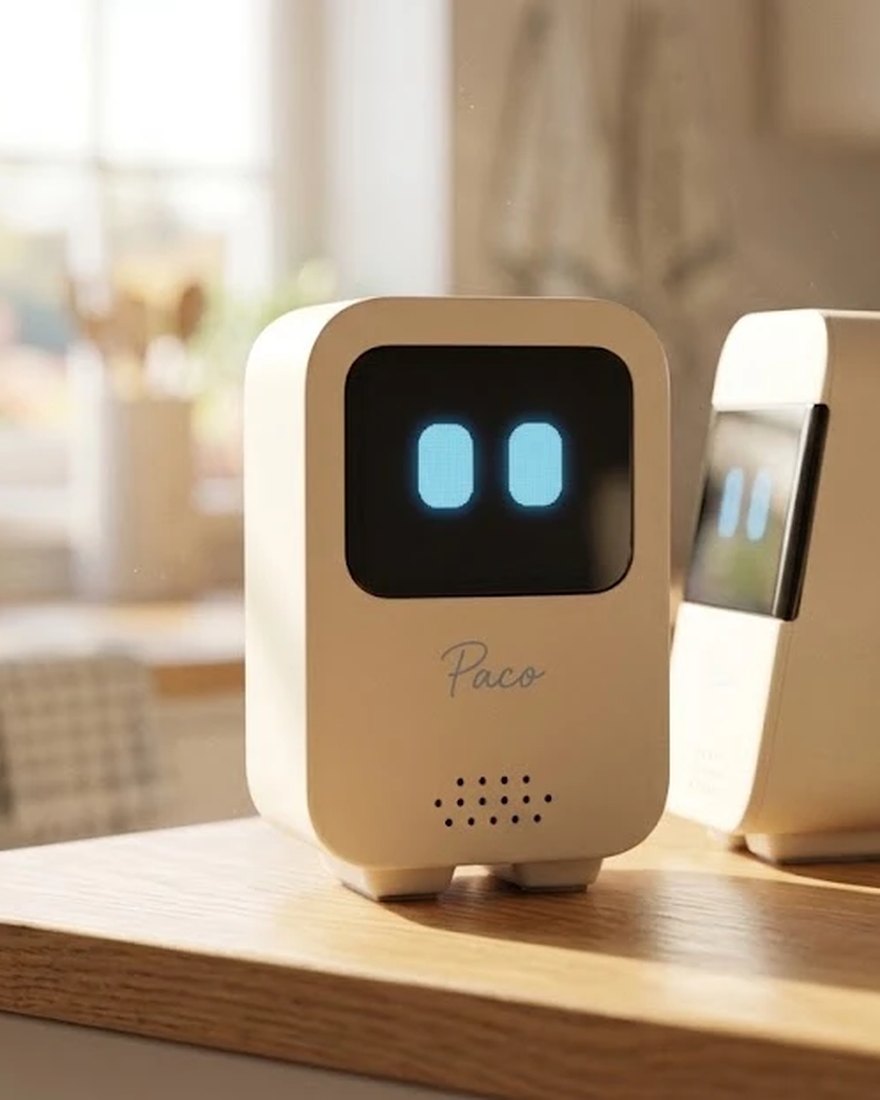
We've written a separate page on the loneliness of older adults and everything that helps — with devices and without them: companionship for older adults: what really helps.
How is it different from a smart speaker?
A smart speaker answers commands: play music, what time is it, turn on the light. It answers — and forgets you. Every request starts from scratch, you repeat its name in every sentence, and it doesn't know who you are or what matters to you.
A companion robot is built the other way around: you call it once and it stays with you chatting, it remembers what you've told it before, and it's the one who reminds you when it's time. The speaker is a voice remote control; the companion robot is someone to talk to. It also has a body and a face: you see it listen, cheer up, live — and that, small as it sounds, is what makes you want to talk to it.
Does it replace telecare? No — and be wary of anyone who says so
Telecare (the red button, the 24-hour service with operators) is an emergency service: it's there for the bad moment, with people on call at the other end. A companion robot is there for all the other moments: conversation, routine, reminders, spirits.
They don't compete: they complement each other. If a home needs telecare, get it — and let the companion robot do its part, which is to keep company. We say so in writing in our terms (in Spanish): Paco is not a medical device or an emergency service, and its reminders must never be the only reminder of an important medication.
How much a companion robot costs
The market is a huge range. There are simple robot pets at €100–300, imported social robots at €800–2,000 (often in English or with "translated" Spanish), and high-end therapeutic robots over €5,000. On top of that, almost all the ones that truly converse add a monthly subscription — because the artificial intelligence that listens and answers has an ongoing cost.
Paco will have a device price plus a monthly subscription, and we'll announce them when sales open. To find out the moment it's ready, join the waiting list: reserving costs nothing and doesn't commit you to buy.
How to choose: six questions before buying
1. Does it really speak your language? Not "supports English": does it converse naturally, and understand an older person speaking the way they speak? If more than one language is spoken at home, ask whether it has them.
2. Does it remember the person? Ask for a demo: tell it something today and ask it tomorrow. Without memory there's no company.
3. Does it remind on its own? Medication, appointments, routines. A robot you have to ask everything is half a solution.
4. What about privacy? Does it record conversations? Where does the memory live? Can it truly be deleted? Is there a camera always on? Get the answer in writing.
5. Is it honest? Since August 2026, the European AI law requires a robot to say that it is one. One that pretends to be a person, or uses affection so you won't switch it off, is a bad sign — and it's also illegal.
6. Who answers? A company with support in your language and a European warranty, or an import with no one at the other end.
Reserve your Paco See everything Paco does
You might also like: robot pet: EMO, Eilik and friends · home robots: beyond the vacuum cleaner · companionship for older adults · frequently asked questions.